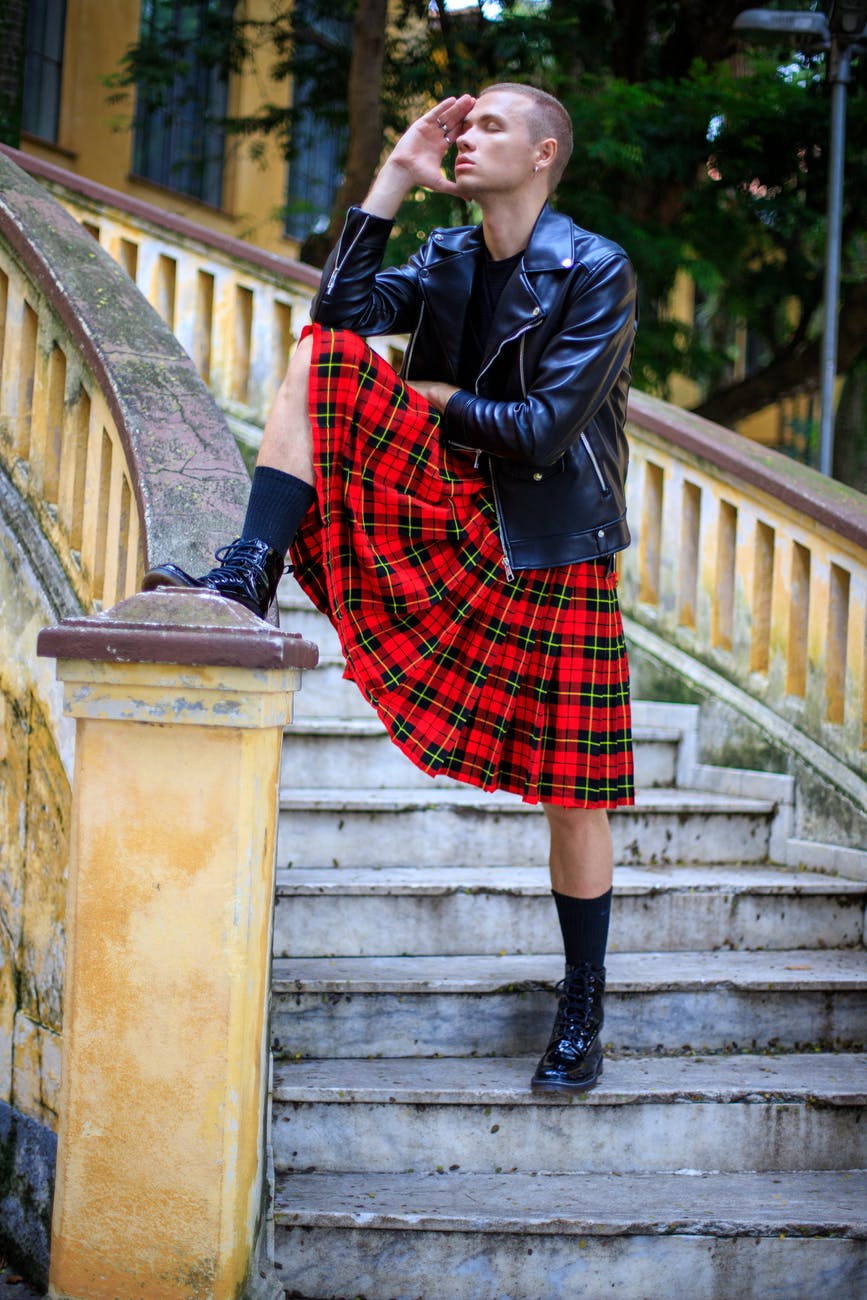
What is the significance of a tartan?
The Scottish tartan evokes feelings of tradition, of ancestry. The Scottish tartan is often representative of bloodline, heraldry that identifies one family to another. The plaid that makes a tartan is distinctive and usually carries a sense of pride. The pattern gives the wearers a feeling of belonging and unique individuality.
What if I am not of Scottish heritage?
This uniqueness often leads those desiring to wear a kilt that is non-Scot to wonder if they risk offending those with Scottish heritage should they choose to wear a kilt. There are also Scottish folks who may not find a tartan belonging to their family name or appreciate a tartan from a specific region or even another clan instead. The answer seems not to be whether these folks should wear a tartan, not of their name – the kilt is such a fantastic thing; we encourage the kilt to be worn by all – but how to wear one without engaging in inappropriate appropriation.
A lot of this puzzle comes down to the pattern of the tartan. Some plaids are related to particular families or Scottish heritage clans that should only be worn by their specific descendants. Luckily, these tartans are incredibly far and few between, limited to strictly royal name only. Conversely, there are many options for the non-Scot kilt enthusiast – or anyone who fancies a particular tartan.
What about the Stewart tartans?
There are a couple of tartans that are the most common for all to wear. The Royal Stewart, initially designed in 1800, was intended to denote what the name insinuates, THE Royal tartan. However, due to many British Isles residents wishing to show their loyalty, it became commercialized and well-loved by all. Its distinctive and bold colors are primarily a bright red and hunter green, making it recognizable worldwide. Found not only in kilts but in all manner of clothes and furnishings, the Royal Stewart tartan is displayed with pride and can be worn by all without any offense.
When the Royal Stewart was popularized and commercialized, it created the Royal Family’s need to have an exclusive tartan. As a result, Prince Albert, Queen Victoria’s husband, had the Balmoral created in 1853. The Royal Family can only wear this tartan, so that is the one tartan that is not permissible for anyone else to wear at any point.
The Stewart line has produced another tartan standard for all to wear as well. While still maintaining the traditional red and green, white is a more predominant color in the Dress Stewart. Much like the Royal Stewart, the Dress Stewart is familiar for school uniform patterns and at Christmastime – therefore, wearing it in your kilt wouldn’t offend whatsoever.
What about military tartans?
For those who cannot call a tartan their own, another plaid stands famous for all. The Black Watch tartan has a military history, dating back to at least 1725. Its original colors of dark blue and green are complementary and easily worn by most people. Women also enjoy wearing neutral and pleasant tones and are commonly found in clothing and other items.
If you are or have been a member of the United States armed forces, you have the unique opportunity to merge your pride of service with your pride for Scotland. Yes, even the US military carries its very own tartan!
Are there tartans for specific places?
Enjoying a kilt’s tartan significant to a region helped spawn some regional tartans instead of indicative of any familial history or ancestry. Thus, in recent years tartans such as the Pride of Scotland, Scotland Forever, and the Glasgow tartans have come about. These tartans’ excellent representation is that they induce pride in a region, rather than a clan, allowing anyone who may share an appreciation for a particular place to enjoy its tartan.
Are there clans who are open to anyone wearing their tartans?
Many clans have shared their tartans with the world, allowing anyone to use them. These tartans are so popular that anyone who enjoys the pattern may wear the tartan with pride. Families like the Lindsays, Macleods, and of course, as previously mentioned Stewarts, share their tartans with all wishing to display a tartan and are often seen in school uniforms, kilts, and all manner of other clothing.
What about fictional tartans? They are ok, right?
Sometimes fact, history, and fiction mingle, as in the critically acclaimed Outlander series. The two main clans featured in the popular Starz show, the Mackenzies, and the Frasers, were not exclusively fiction works. In reality, these clans existed as loyal Jacobites and engaged in several battles featured in the show in our real Scottish history. As such, their tartans have been very popular and are encouraged to be donned with much enjoyment.
How do I behave in tartan?
An important note of distinction here is how you should behave while wearing any tartan. While most tartans are up for grabs in terms of not offending anyone in its usage by anyone, it doesn’t change the solemn tone that the very word tartan evokes.
The tartan is a fabric that denotes tradition, unlike any other patterned fabric available. Its wearers must exhibit a certain amount of reverence when choosing to wear a tartan, especially related to the region’s clothing like kilts.
This feeling of Scottish pride – even for those who are not of Scottish descent – holds especially true if you wear a tartan of a well-respected family or clan. Misbehaving while representing a family with a good name or a well-loved region tarnishes the time-honored tradition meant by the tartan’s sheer wearing. Enjoy wearing a tartan while not being disrespectful while doing so.
The overall verdict?
At the end of the day, if a tartan catches your eye, it’s likely perfectly acceptable for you to wear it. Whether you are of Scottish heritage and have your family tartan, cannot find your family tartan, or a non-Scot who loves the plaid’s beautiful patterns, wear it.
 Solyndria Creative